
Printed invoice books still work on site
Even with digital admin in the background, a printed invoice book still earns its keep for trades, delivery teams and service crews. It gives you a signed record when you are at a mine gate, a school receiving bay, or a business yard where there is no time to wait for a full office printout.
In the Bojanala area, many teams still need paperwork that can move with the job. A proper invoice book helps you capture the customer name, job details, quantities, VAT if needed, and proof of receipt in one go. That matters when work is spread across Rustenburg CBD, Tlhabane, Phokeng, Kroondal, Marikana and Mooinooi.
For trade businesses, the best book is the one that matches your process. Too few copies and your office struggles later. Too many copies and the book gets bulky and awkward in the bakkie. The aim is to keep each job tidy from start to finish, with less re-writing and less confusion.
Duplicate books for quick handover and office follow up
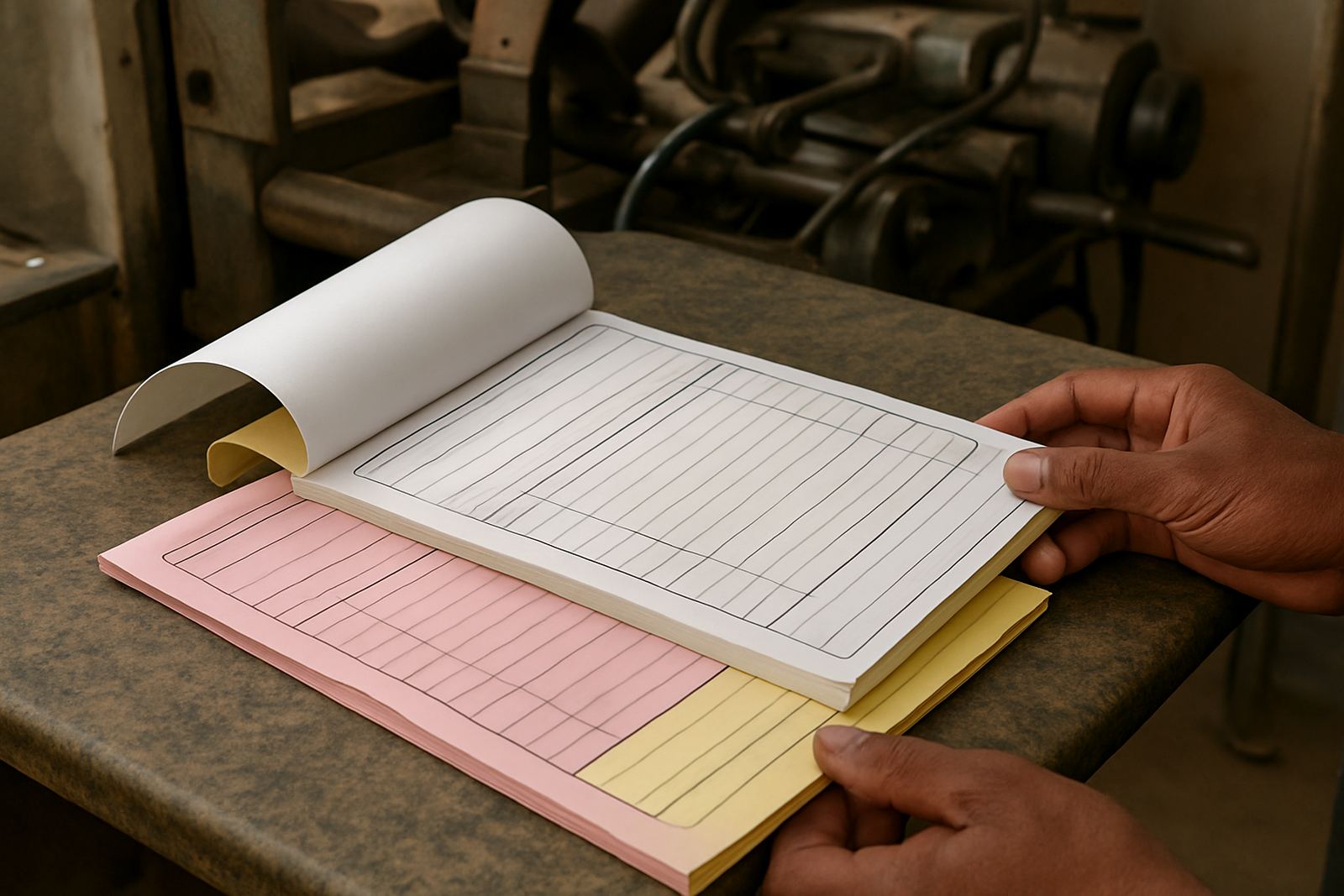
Duplicate invoice books are the simplest option. They produce two copies at once, usually one for the customer and one for your records. This works well for smaller jobs, cash sales, callouts, and any work where you only need a clear paper trail without extra internal copies.
For many Rustenburg businesses, duplicate books suit quick supply runs and site jobs where the technician or driver needs to leave proof behind. They are light, easy to carry, and practical for repeated daily use.
Good duplicate books should have clean numbering, enough writing space and paper that transfers clearly. If the copy is faint, cramped or smudged, the whole point is lost. In load-shedding conditions or low light inside a workshop, a neat layout with strong contrast helps the hand writing stay readable.
- Best for small service calls and same day deliveries
- Useful when only one office copy is needed
- Compact enough for vehicle storage
- Works well for businesses with moderate daily invoice volume
Triplicate books when warehouse, office and client all need a copy
Triplicate books are better when more than one department must keep a record. The customer gets one copy, accounts gets one, and the third stays with operations, dispatch or the site team. This is common where goods leave a yard, machinery parts are supplied, or work is billed across several steps.
For mines, contractors and larger suppliers in North West, triplicate books can save time later because everyone has the same reference number. If a delivery is disputed, or a service note needs checking, the paperwork is already there.
They do take up more space than duplicate books, and the writing pressure needs to be right so the second and third copies remain clear. If your staff move between offices, yards and client premises all day, that extra copy is often worth it.
- Useful for stock issues and delivery control
- Helps when separate teams handle sales, dispatch and accounts
- Good for businesses with jobs across multiple sites
- Supports clearer reconciliation at month end
Numbered invoice books for tighter control and less lost paperwork
Numbered invoice books are essential when you want better control over admin. Each book and each invoice can carry a clear sequence, which makes it easier to track missing forms, check cash-up totals and follow up on unpaid work. For growing businesses, this is often the format that stops small mistakes becoming expensive.
Sequential numbering matters in trade work because people are on the move. A driver can leave one copy at a gate, a supervisor can sign another, and the office can still reconcile the job by number. If a page is skipped or torn out, you can see it straight away.
Many businesses in Rustenburg use numbered books for recurring accounts, labour charges, callout fees and supply orders. It is a simple way to keep order when several people handle paperwork during a busy week.
- Makes audit trails easier to follow
- Helps identify missing or duplicated invoices
- Supports month end checks and cash control
- Works well for companies growing beyond one vehicle or one counter
What to look at before you choose your format
The best invoice book is not only about the number of copies. You also need to think about size, paper quality, binding and the information fields that matter to your business. A plumbing team, for example, may need space for labour, materials and site notes, while a supplier may need columns for item code, quantity and unit price.
Paper thickness is worth checking because books travel in bakkies, tool bags and office trays. In humid coastal conditions paper can curl, and in dusty yard environments pages can get damaged fast.
Before you order, ask yourself these simple questions:
- How many copies do we need on each job?
- Do we issue invoices from the office, on site, or both?
- Do we need numbered pages for control?
- Will the book be used by sales staff, drivers or technicians?
- Do we need extra space for VAT, terms and delivery notes?
If the answer is not clear, start with the process. The layout should fit your daily routine, not the other way around. That one decision can save time on every single job.
A Rustenburg example from the field
A local example is a contractor working between Rustenburg CBD, Phokeng and Kroondal. The office sends out quotes, the site team delivers materials, and the accounts department needs a clean record for each job. In that setup, a duplicate book might be fine for small repairs, but triplicate books are usually better for larger supply runs.
That same business may also need strict numbering so jobs do not go missing between the yard and the customer. When there are multiple vehicles on the road, a numbered book helps the office see who issued what, and when. It is a practical control tool, not just paperwork.
For schools, mines and small businesses across Bojanala, the right book also helps with receiving procedures. A signed copy at the gate, a second copy for the office and a third for dispatch can make delivery checks much easier. That matters when the week is busy and everyone is working from different points.
Keeping your invoice books practical, neat and ready for work
The best invoice book options are the ones your team will actually use properly. If the pages are too small, too few or too awkward to write on, staff start making side notes and the record gets messy. Keep the format simple, readable and suited to the way your team works in the field.
Across Rustenburg and nearby supply areas, we produce printed stationery, branding and job-ready paperwork for businesses that need books made properly. From graphic setup to print finishing, the goal is to make the book useful on day one and reliable after months of handling. A good invoice book should save time, not create more admin.
If you are deciding between duplicate, triplicate or numbered books, start with your most common job type and build from there. The right format will usually show itself once you match it to your daily flow, your staff and the places where you work.