
Pick the location before deciding on flag size
Good flag placement starts with walking the site first. At a school sports day, mine open day or weekend market, the best position is not always the nearest open patch. You need a clear line of sight from the main approach, enough space for the base, and a spot where the flag will not block walkways, gates or emergency access. In Rustenburg CBD, where foot traffic can shift quickly around taxis, stalls and entrance points, a flag works hardest when it catches people before they reach the crowd.
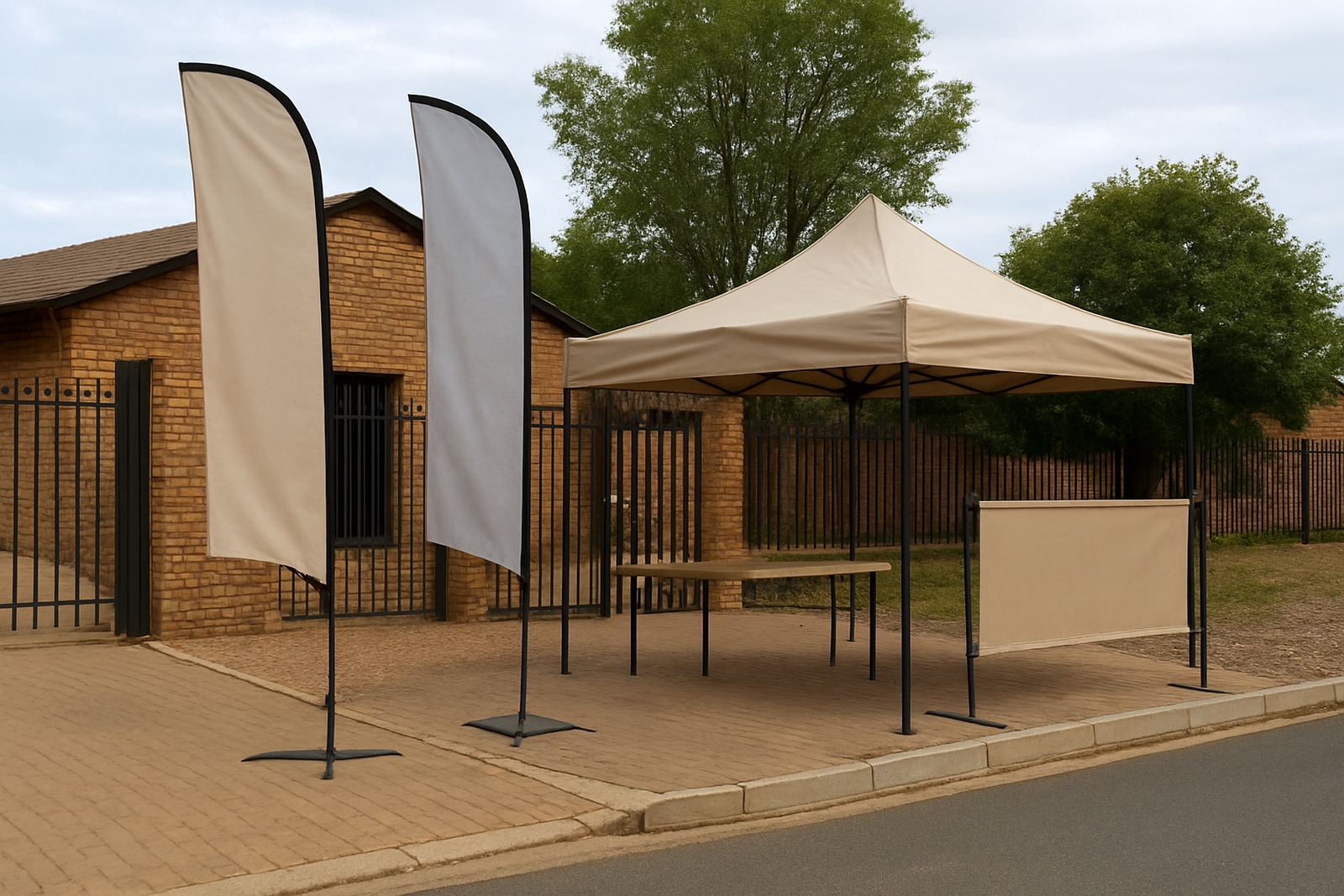
Feather flags are usually the better choice when you want height and movement that can be seen from a distance. Teardrop flags hold their shape well and read neatly when people are moving past at speed. If the venue has low ceilings, trees, lighting poles or tight courtyards, the size and shape must suit the site or the flag becomes less usefull than a simple sign board.
- Place the flag where people first turn in, not only where they queue.
- Allow enough space so the pole can flex without hitting walls, roofs or other displays.
- Check whether the main viewing angle is from vehicles, pedestrians or both.
Read the wind, not just the weather
North West weather can change fast, especially at open sports grounds, mine compounds and outdoor activation sites. A flag that looks fine in the morning can twist hard by afternoon if the wind picks up. That is why placement should consider the direction of the strongest breeze, not just the prettiest available corner. If the flag faces into a strong crosswind, it can lean awkwardly or wrap around the pole and lose impact.
At coastal areas humidity can affect some materials over time, but in Rustenburg the bigger issue is often dust, gusts and uneven ground. The base must suit the surface. On paving, use a stable weight that will not shift. On grass or compact soil, ground fixing is often safer. If the site is exposed, it is better to move the flag slightly back from the edge than to place it where it fights the wind all day. That keeps the branding readable and helps the setup last longer.
- Test the wind direction before final fitting.
- Keep flags away from sharp corners where gusts can whip through.
- Choose heavier bases for hard surfaces and proper ground spikes for soft ground.
Keep branding visible from the right distance
The purpose of an event flag is not only to look lively, it must actually help people find you. That means the artwork, height and position all need to work together. At a school fundraiser in Phokeng or a supplier day in Marikana, the first viewer may be 30 metres away in a car or on foot. In that case, the wording on the flag must be short enough to read quickly and the flag must stand above the crowd line.
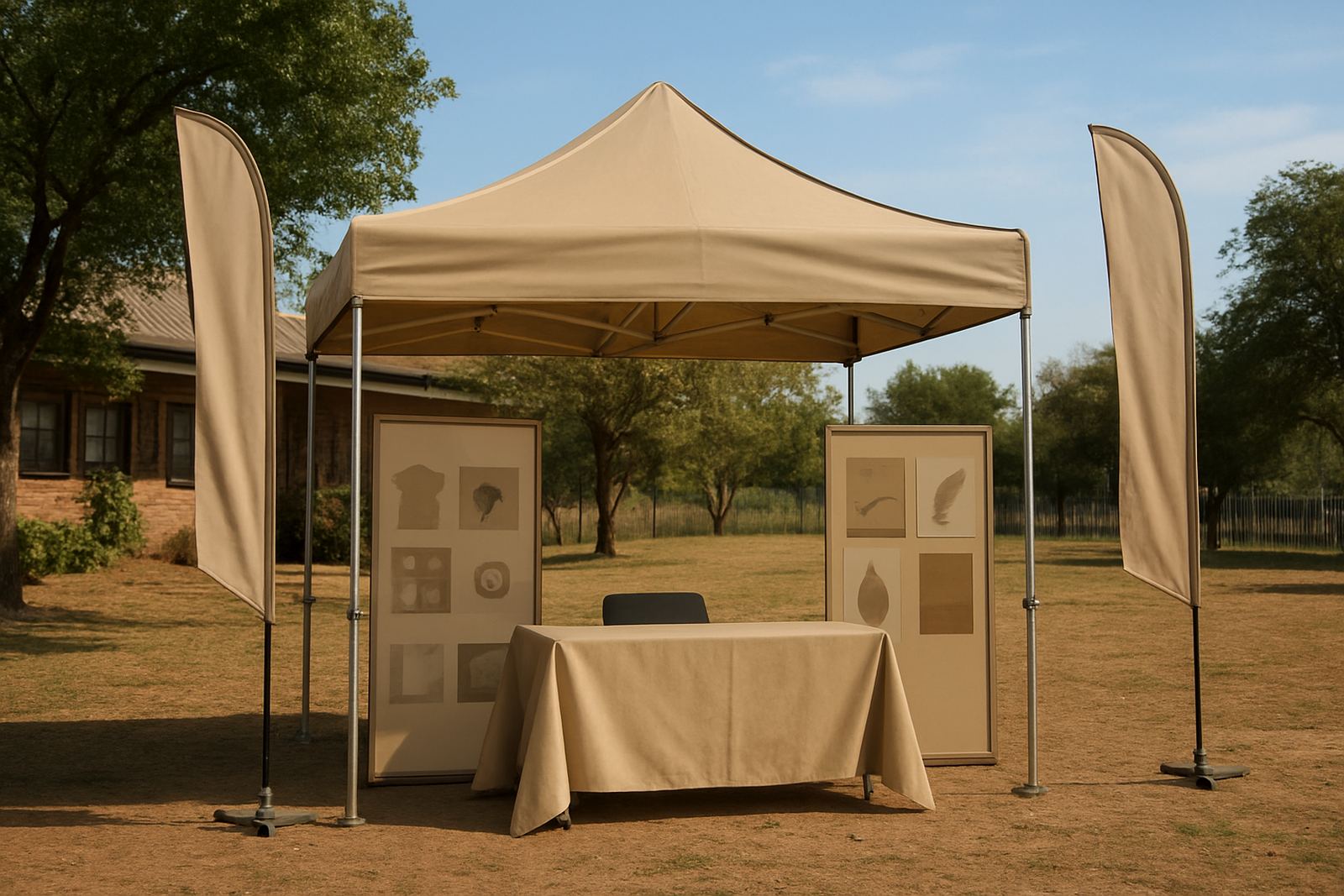
For busy venues, one flag is often not enough. A pair at the entrance can frame the approach, while another set near the stand or registration table helps guide people once they are inside. Spacing matters. If the flags are too close together, they start to look like clutter. If they are too far apart, the eye does not connect them. The aim is to create a clear path without overloading the site with signage.
- Use bold logos and limited wording for fast reading.
- Keep a consistent height across the set when possible.
- Use flag placement to guide people toward the next point, such as registration, sales or a stage.
Match the flag to the venue type
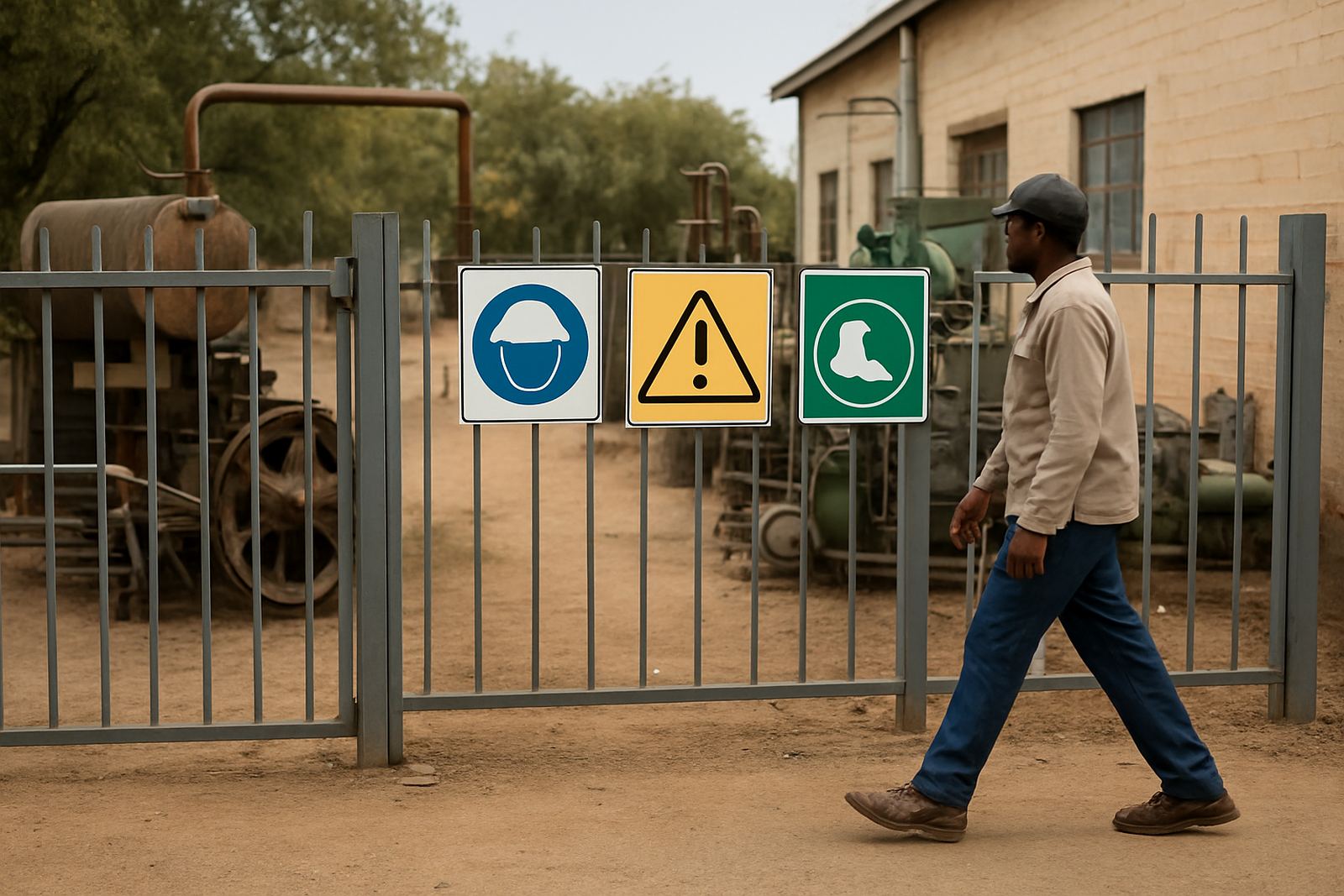
Different venues need different placement choices. A school field in Mooinooi has open visibility and more space to anchor flags. A mine entrance in Boshoek may have tighter security control points and stronger vehicle movement. A retail activation in Tlhabane may have constant pedestrian flow and limited room for bases. The same flag can work in all three places, but not in the same way.
For vehicle traffic, place flags where drivers can see them before turning in. For pedestrian traffic, keep them near eye level sightlines and out of the walking line. For stages or product displays, position them so they support the main focus instead of stealing attention from it. At a community event in Mogwase, for example, a teardrop flag near the parking area can help people spot the entrance, while a feather flag at the information point can mark the exact stand. That small difference in placement can save time and cut confusion.
- Vehicle entry: place flags before the turn, not after it.
- Foot traffic: keep the base out of the path and away from loose cables.
- Stage areas: avoid blocking speakers, cameras or sight lines to the main activity.
Set up safely and keep the site tidy
Busy venues can become messy quickly, especially when there are tents, tables, power leads and delivery vehicles on the same site. Flag placement must support safety as well as branding. Bases should be stable, cables should be routed away from the pole area, and the flag should not swing into walkways where children or staff may pass close by. This is even more important during load-shedding events when lighting can be reduced and people depend more on visual cues.
It helps to think like a site manager. Will the flag still be safe when a crowd builds up? Can cleaning staff or security move around it? Is there enough room for setup and takedown without damaging grass, paving or paintwork? In Rustenburg CBD, municipal spaces and private venues often have their own rules about placement, so it is worth checking access, fixing points and approval needs before the event starts. A tidy setup looks more professional and is easier to manage right through the day.
- Mark the base position before the crowd arrives.
- Keep the flag clear of doors, exits and fire routes.
- Check the pole and fittings again after strong wind or heavy foot traffic.
A local example from Rustenburg CBD
Imagine a business expo at a Rustenburg venue where suppliers from across Bojanala are setting up stands. The main entrance opens onto a wide parking area, but most visitors arrive from one side where taxis and delivery vehicles pass through. If the feather flags are placed only at the stand itself, people may miss them until they are already inside the hall. A better plan is to place one pair at the approach road, another at the entrance gate, and a final marker beside the stand. That way the branding works from distance to close range.
This is the kind of practical setup Crystal Clear Printing works with every day from our Rustenburg CBD base. The right placement depends on the ground, the crowd, the wind and the event route, not just on where there is space left over. When the flag is positioned well, it does more than advertise. It helps people move, find and remember the site, and it does that without shouting for attention. A small change in position can make the whole display feel more organised and direct.
For events, schools, mines and business activations, the best flag is often the one people notice before they even realise they were looking for it.