
Why helmet stickers matter on busy North West sites
On a mine, construction site or depot, people need to know at a glance who is who. A clear hard hat sticker can show a worker's name, company, trade, site permission or safety status without slowing the day down. That matters in Bojanala where contractors, visitors and subcontractors often move through the same gate and the same work areas.
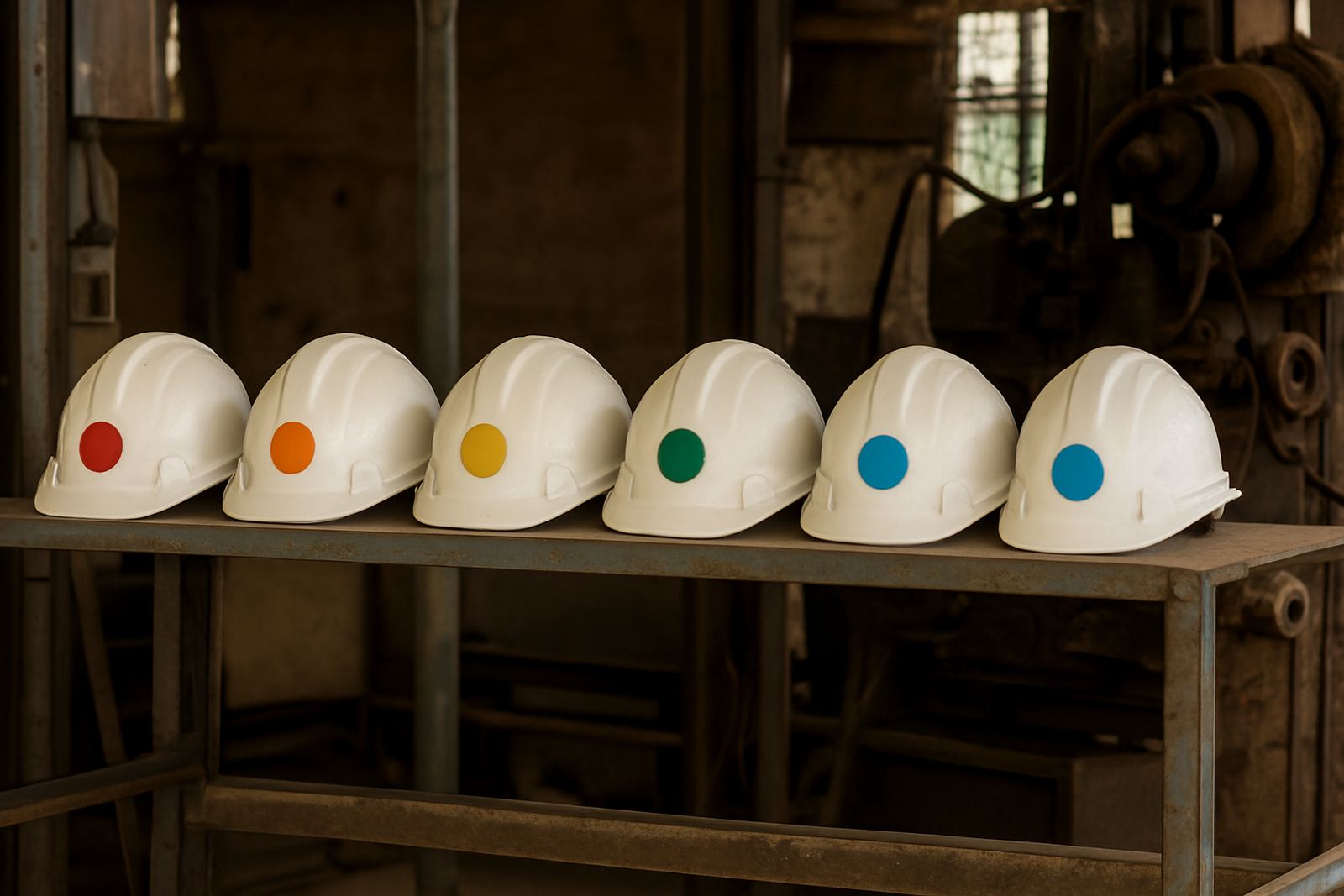
Helmet stickers also help supervisors spot the right person for the right task. A colour coded sticker can mark an electrician, a first aider, a scaffolder or a visitor. When a shift changes, the sticker system stays visible even if gloves, overalls and dust make face to face checks slower than usual.
For Rustenburg businesses serving mines schools and plant maintenance teams, stickers are a practical way to keep things orderly. They are small, but they carry useful information all day long, and they do not rely on someone remembering to say who they are. That saves time at gates, workshops and loading areas.
Identification that holds up in dust, heat and rain
A good sticker should stay legible after long shifts, sun exposure and the usual knocks that come with site work. On exposed sites around Rustenburg and Marikana, heat and dust can lift poor adhesive or blur print fast. For that reason, sticker material, print method and finish must be chosen for the conditions, not just for appearance.
Most helmet stickers need to be cut to shape, laminated and applied with care so edges do not peel. A clean finish helps them last through daily handling, wiping and sweat. If the sticker carries an ID number or QR code, the print must stay sharp enough to scan when the helmet is scratched or marked from use.
For wet weather or coastal transfer work, the same principle applies: use a finish that can handle moisture and repeated cleaning. In practice, the best helmet stickers are the ones workers stop noticing because they simply stay on the helmet and keep doing their job.
- Use simple colour systems so people can read them quickly.
- Keep text short enough to stay clear on a curved helmet shell.
- Place stickers where they do not interfere with safety markings or vent holes.
- Choose a finish that resists water, dust and routine wipe downs.
Access control and site rules made easier
Many sites need a fast way to show who may enter which area. Helmet stickers can carry access level markers, department tags or contractor names. That is useful when teams move between gate security, laydown yards, plant areas and offices. Instead of checking paperwork every time, security staff can confirm a person with a quick look and move the queue along.
Stickers also help with internal site rules. A visitor sticker can show that a person must remain escorted. A contractor sticker can show a valid induction date. A colour band can show whether a worker is allowed in a specific zone. This reduces confusion and supports the site manager's control measures without adding extra admin.
For schools and municipal projects too, helmet stickers can show maintenance teams, emergency response crews or approved access groups. The system does not need to be complicated. It only needs to be consistent so the same sticker means the same thing every time.
- Visitor stickers should be easy to identify from a distance.
- Temporary access stickers should include dates or shift periods.
- Department stickers work best when the site uses one colour logic across all teams.
- Numbered stickers can link to a register for audits and roll calls.
Using stickers for safety campaigns and reminders
Helmet stickers are also useful for short safety messages. A site can run a campaign on hand protection, eye protection, lockout steps or reporting hazards and place the message where workers see it every day. Unlike posters on a noticeboard, a helmet sticker travels with the person from the toolbox talk to the work area.
That makes them handy for seasonal campaigns as well. In summer, a sticker can remind crews about hydration and sun protection. During rainy months, the message may focus on slips, visibility or wet surfaces. On high risk sites, a small sticker can remind workers to stop and check before lifting, cutting or entering a restricted area. It is a simple method but it helps keep the message alive.
Sticker campaigns work best when they are short and direct. A line of text, a symbol and a strong colour usually does the job. Too much wording becomes cluttered on a helmet and people ignore it. A concise reminder is easier to read while walking, standing in line or waiting for a task briefing.
Branding crews, contractors and events without slowing the job
Helmet stickers are not only for safety and access. They also help a business show its name on site, at a public event or during a community outreach drive. When a team arrives in branded overalls and marked helmets, clients see a coordinated group rather than a mix of anonymous workers. That matters for mines, schools, local contractors and festival crews across Bojanala.
For temporary events, a sticker is often quicker than changing full uniform items. A branded helmet sticker can be used for site teams, setup crews and delivery staff. If the job changes from week to week, the sticker format can be updated without replacing the whole kit. This keeps costs in check and helps smaller teams stay presentable.
In Rustenburg, where businesses may need quick turnaround for shutdown work or an urgent project start, sticker branding is a practical option. It gives a neat visual identity even when the job is rough and the weather is not playing along. We have seen sites use the same layout across helmets, vehicle magnets and barrier signage so the whole team looks consistent from gate to handover.
- Branded stickers are useful for temporary crews and project teams.
- They can match other site items such as signage, uniforms and vehicle markings.
- They are a lower cost way to mark short term work than changing every item of clothing.
- They help visitors recognise authorised teams on arrival.
What to plan before ordering helmet stickers
Before ordering, decide what the sticker must do. Is it for identification, access control, safety reminders or branding? Once that is clear, the next step is size, shape and placement. A sticker on a curved helmet must be readable from a sensible distance and not clash with existing decals or shell vents. If the helmet already carries statutory markings, keep the new label neat and separate.
The conditions on site matter when you choose the sticker spec. Dusty and high heat areas need a tougher finish than indoor use. If helmets will be washed often, the adhesive must stay firm. If the sticker includes names or role titles, spellings should be checked before printing because small errors are hard to hide once a batch has been applied.
For companies in Rustenburg CBD, Tlhabane, Phokeng, Kroondal, Boshoek, Marikana, Mooinooi and Mogwase, the simplest route is to keep one standard layout for most helmets and then add special versions for visitors or project teams. That keeps ordering tidy and makes replacement easier when stock runs low.
Across Rustenburg and the wider Bojanala area, we produce helmet stickers for businesses, mines and schools, including artwork setup, lamination and delivery. If you need helmet stickers that fit the way your site actually runs, start with a clear use case and build the label around that.