
When embroidery makes more sense than print
Embroidery suits garments that get regular wear, heavy washing and rough handling. If your team works in a mine office, school admin block, warehouse or service yard, stitched branding usually lasts longer than heat-applied branding and can hold up better when shirts are washed week after week.
It also gives a neat raised finish that suits polos, jackets, golfers, caps and fleece items. For many clients in Rustenburg and across Bojanala, embroidery works best when the logo is simple, the company name is short and the garment fabric is thick enough to carry the stitching properly.
- Best for polos, jackets, caps, golf shirts and fleece tops
- Good for repeated washing and daily use
- Neat on staff uniforms, site wear and front-of-house clothing
- Works well when you want a formal, professional finish
Where print has the advantage
Printed branding is often the better choice when a logo has fine detail, small text or more colours than embroidery can handle cleanly. It is also useful when you need large artwork on the back of a shirt, a one-off campaign garment or a lighter feel on the fabric.
Heat-applied print can suit promotional T-shirts, event clothing and some safety wear, especially when the garment is thin or stretch material. For short runs, print can be quicker and more cost effective, while embroidery becomes more practical on repeat orders and uniforms that need a firmer finish.
- Better for detailed logos and small lettering
- Useful for short runs and event clothing
- Good for large back branding or multi-colour artwork
- Can feel lighter than stitching on some garments
What the garment itself is telling you
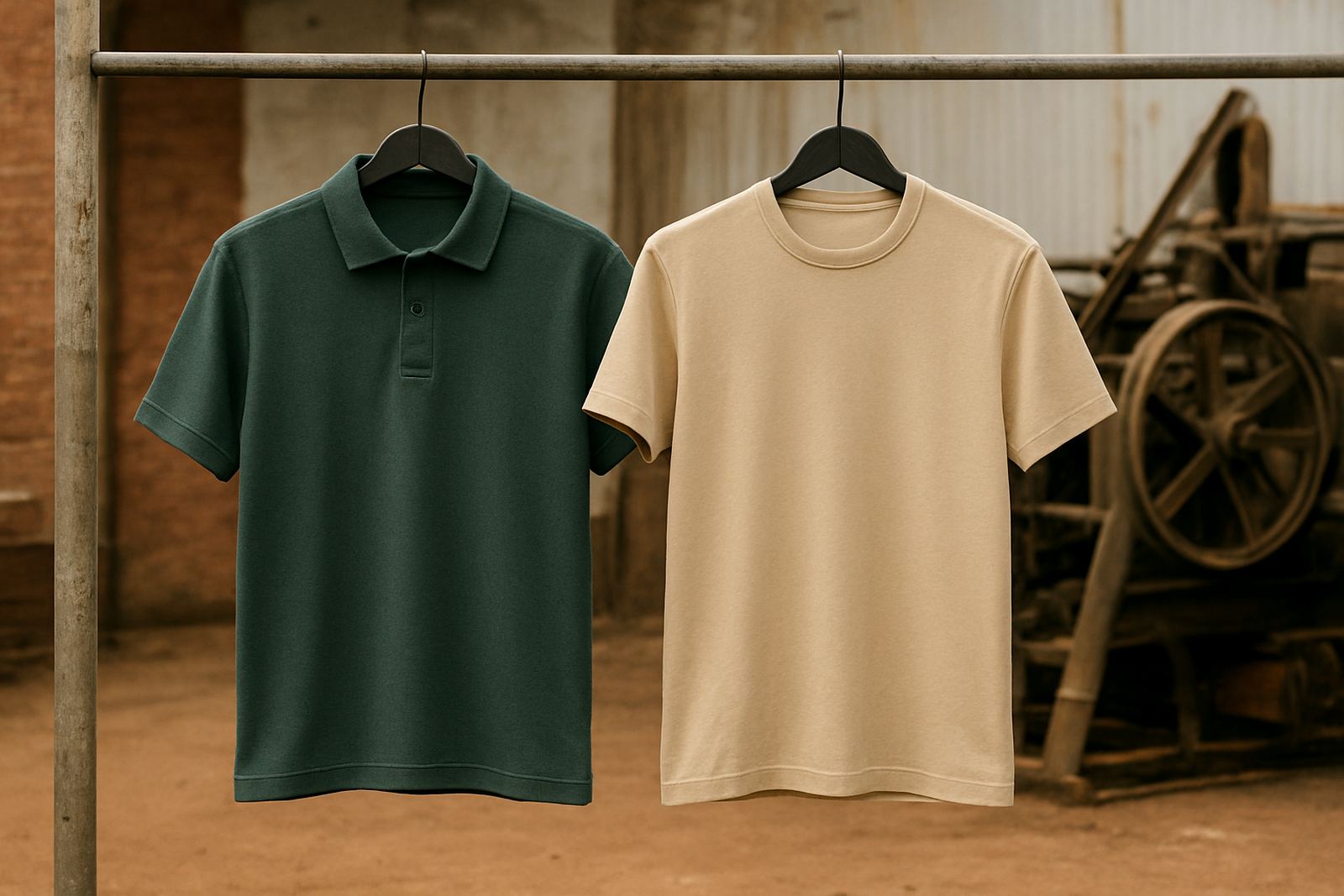
Not every item should be treated the same. A structured golf shirt, a cotton-rich jacket or a cap will usually take embroidery well. A very light T-shirt, rainwear or stretch fabric may need a different method, because needlework can pull the cloth or leave the surface looking uneven.
We look at the fabric weight, the seam positions and how the item will be worn. A work shirt for a foreman doing site visits in Kroondal is not the same as a promotion shirt for a school event in Mogwase. The garment should guide the branding method, not the other way around.
- Thicker fabrics generally suit embroidery better
- Stretch and very light fabrics often suit print or a different application
- Caps and jackets usually take stitched branding well
- Rainwear and coated garments need careful method selection
If the item will be packed, folded, washed and worn hard, choose a method that keeps its shape. If the artwork is detailed and the garment is casual, print can be the cleaner option.
How mining, school and business clients usually decide
In Rustenburg, many orders come from teams that need a proper uniform look without constant replacement. Mining offices often ask for embroidered shirts and jackets because they need a tidy finish that holds up in transport, site visits and long shifts. Schools often prefer stitched staff clothing for events, open days and daily admin wear.
Local businesses use both methods. A clinic or legal office may want embroidery on collars and chest areas, while a promotions team may need printed shirts for a one-day launch. The choice often depends on budget, quantity and how formal the clothing must look once it is on the body.
- Mine teams often choose embroidery for jackets and polos
- Schools often order stitched staff wear for a smart, lasting finish
- Promotional clothing often uses print for colour and detail
- Mixed orders can use both methods on the same campaign
A local example from Rustenburg CBD to site gates
A customer in Rustenburg CBD may come in needing shirts for reception staff, site supervisors and drivers. The reception team might be better suited to embroidered polos because the garments will be worn daily and need to look neat at client meetings. The driver shirts may need printed branding if the design has small text and a larger back print for easy identification.
Another common case is a contractor supplying a project near Marikana or Boshoek. The hardwearing jackets can carry stitched logos on the chest, while the event shirts handed out at induction can use print to keep costs under control. This mix gives a practical result and avoids forcing one method onto every item.
When the order is planned properly, the uniform looks consistent even if the branding methods differ. That matters when crews move between offices, depots and site entrances.
What to check before you approve the artwork
Good branding starts before production. The artwork must suit the method, the garment size and where the logo will sit. Small lettering can become unreadable in embroidery, while some printed artwork may need cleaning up before it is ready for output.
We recommend checking stitch size, logo placement, thread colour and garment colour together. A dark shirt with a dark logo will disappear. A very detailed crest may need simplification for embroidery so the final piece still looks sharp from a few metres away.
- Check logo size against the garment panel
- Keep fine text large enough to read
- Match brand colours to cloth colour for contrast
- Confirm placement on chest, sleeve or back before production
For repeat orders, it helps to keep the approved layout on file so later batches stay consistent. That saves time and keeps the team looking uniform across branches and seasons.
Choosing the method that works hard after delivery
Embroidery is often the better long-term choice for workwear because it stays presentable after regular use. Print is still the right answer when the artwork is complex, the run is short or the garment needs a lighter touch. The decision should be based on the fabric, the job and the finish you want on the day the clothing is actually worn.
For Rustenburg clients supplying mines, schools and businesses across Bojanala, that practical call matters. Garments have to survive dust, washing, travel and long hours. If you are unsure which method suits your order, it is usually better to test one item first than to push the wrong finish across the whole batch.
At Crystal Clear Printing, we help clients choose between embroidery and print for the garment in front of them, not just the logo on paper. That approach keeps the clothing useful, presentable and fit for the work it has to do.