What workwear embroidery is and why it lasts
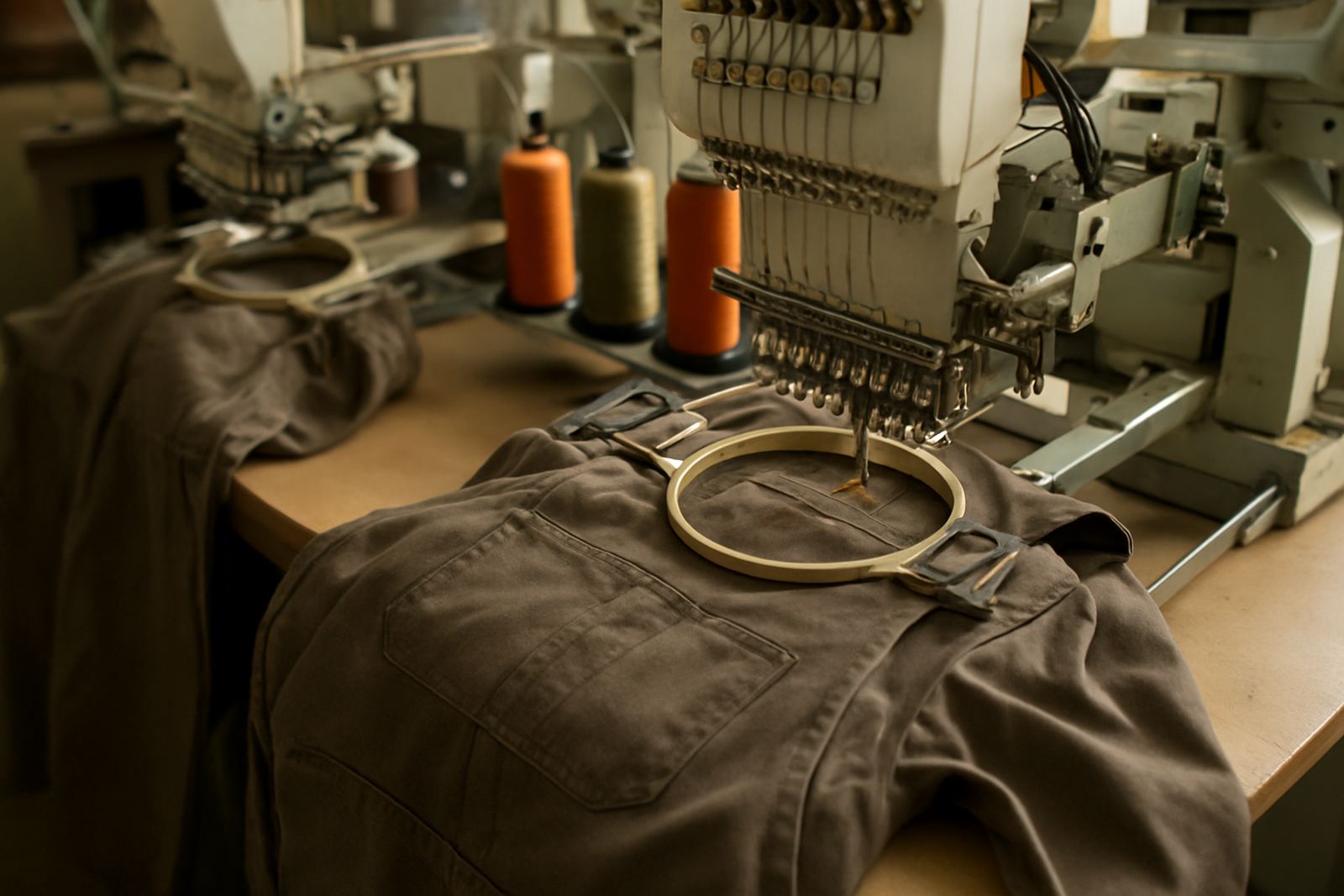
Workwear embroidery is the stitching of names, logos, departments or staff roles directly into fabric using thread, not ink. That means the marking sits in the cloth itself, so it keeps its shape through repeated wash cycles, dust, sunlight and the hard wear that comes with site work. For uniforms that get used every day, embroidery is usually the cleaner choice when you want a presentable finish that still looks good after months of use.
We use embroidery on cotton drill, polycotton, canvas, fleece and many heavier workwear fabrics. It suits bold logos, simple text and clear identification marks. Fine detail can be done, but very small lettering may need to be opened up a little so it reads well from a distance. If your logo has thin lines or small icons, we will check the artwork first and advise what will stitch properly.
Garments, sizes and placement options
Workwear embroidery can be placed on the left chest, right chest, back yoke, sleeves, collars and caps depending on the garment and the size of the logo. For most overalls and jackets, the left chest is the most common position because it is visible and does not interfere with belts, tool pouches or safety gear. Larger artwork can be placed on the back, while names and departments often sit on the front chest or sleeve.
- Left chest logos: usually 70 to 110 mm wide
- Back branding: often 180 to 280 mm wide, depending on garment size
- Names or roles: generally 20 to 35 mm high letters
- Sleeve marks: suitable for small logos, site names or departments
- Thread colours: matched to your brand colours where possible
We handle adult and youth sizes for uniforms, and can work with mixed staff orders so the placement remains consistent across different garment cuts. If you need one logo for overalls, another for jackets and a smaller version for caps, we can set each option up properly. That saves time at fitment and avoids having to rework garments later.
Where embroidered workwear suits best
This product works well for mines, workshops, contractors, schools, security teams, logistics crews, maintenance staff and office support teams that still need a practical, uniform look. It is also suitable for hospitality, cleaning teams and retail staff who want identification that is more formal than a heat press finish. In the North West, we see strong demand for embroidered overalls and jackets because they handle dust, daily washing and strong sun exposure better than many printed options.
For outdoor work in Rustenburg and surrounding areas, embroidery is a good option because it does not crack in heat or peel at the edges. On coastal routes it also handles humidity well since the thread is fixed into the garment. If your team works around dust, grease or loading areas, embroidered branding usually stays legible longer and keeps the uniform looking tidy. That matters on site when supervisors need quick identification and customers want to see who is on duty.
- Mines and plant contractors
- School support and maintenance teams
- Municipal and cleaning crews
- Security and control room staff
- Service companies and field technicians
Artwork setup, thread colours and production process
We start with your logo or text and prepare it for stitching. That means checking line weight, letter spacing and the number of thread stops needed so the final result comes out neat. Some artwork needs a simpler stitch version, especially if the original file is low resolution or has gradients that will not translate well to thread. Our graphic design and embroidery digitising team handles that setup in house.
Once the stitch file is ready, we choose the thread colours, position the embroidery on the garment and test the first sample if the order is larger. Production is done on embroidery machines suited to garment branding, and each item is checked for tension, alignment and clean backing before it leaves the floor. If you need names added to each item, we can set out the list so every jersey or overall gets the right marking. One wrong initial can cause delays, so we ask clients to check spelling carefully before approval.
Power needs, site fitting and delivery
Embroidery itself is done in our production area, so there is no power or gas requirement at your premises for the stitching process. For delivery or setup of completed workwear, no site electrical connection is needed either. If you are ordering branded uniforms together with banners, gazebos or signage for a launch day, we can coordinate collection or delivery to suit your schedule.
For businesses across Bojanala, we supply from our Rustenburg CBD base and deliver to areas such as Tlhabane, Phokeng, Kroondal, Boshoek, Marikana, Mooinooi and Mogwase. If uniforms need to be sorted by department or site, we can pack them separately so distribution is simpler once they reach you. That is especially useful for mines and school groups where teams are split across shifts or locations.
Care, washing and aftercare for embroidered uniforms
Embroidered workwear is low maintenance, but proper washing helps it last longer. Use normal detergent, avoid harsh bleaching where possible and do not wash heavily soiled overalls with delicate garments. Turn items inside out if you want to reduce rubbing on the thread, especially for jackets that get a lot of friction at the chest and sleeves. On drying, avoid very high heat for long periods as that can shrink some fabrics around the stitching.
If a garment needs mending or a name has to be updated, it is often easier to replace the item or restitch a new panel than to alter old embroidery. Keep a spare list of staff sizes and department names on hand, because small changes happen when people move shifts or get promoted. A tidy stock record also helps when you reorder and need the same look across new batches.
- Wash with similar colours
- Avoid very hot iron contact directly on the stitching
- Do not use strong bleach on dark fabrics
- Keep a reference sample for future reorders
- Check thread colour against new garment batches
What to check before ordering hard hat stickers
Before ordering workwear embroidery, check the garment type, the number of items, the exact logo version and where the branding should sit. It also helps to confirm whether you want just a logo, or logo plus name and department. If the order is for multiple sites, note which items belong to which team so packing is correct from the start. That avoids mix ups and keeps the job moving.
Send through the artwork in the best quality you have, plus any Pantone or colour references if your brand has strict matching rules. If you are unsure about size, ask for a mock-up on the garment type you plan to use. Small differences in jacket cut or overall size can change how a logo reads, so we size each layout with the garment in mind. For a clean finish, leave enough space away from seams, zips and pockets.
Our workwear embroidery is supplied for mines, schools and businesses that need practical branding and clear identification. If you are fitting out a new team in Rustenburg or replacing old uniforms after a busy season, we can help you get the order set up properly from the first stitch.
Key facts
| Product type | Embroidered branding for overalls, jackets and uniforms |
|---|---|
| Common placements | Left chest, right chest, back, sleeve, collar and cap |
| Typical sizes | 70 to 110 mm chest marks, 180 to 280 mm back branding |
| Suitable fabrics | Cotton drill, polycotton, canvas, fleece and heavier workwear |
| Artwork needs | Logo or text file, approved spelling, thread colour reference |
| Service area | Rustenburg and Bojanala including Tlhabane, Phokeng, Kroondal, Boshoek, Marikana, Mooinooi and Mogwase |