
Labels for packs that move from shelf to storeroom
Product labels do more than carry a name. They carry batch details, ingredients, barcodes, warnings, storage notes and a clean first impression for the buyer. In Rustenburg and the wider Bojanala area, many products are packed for local shops, mine canteens, schools, farm stalls and direct supply to contractors, so the label has to stay readable after handling, dust and stacking.
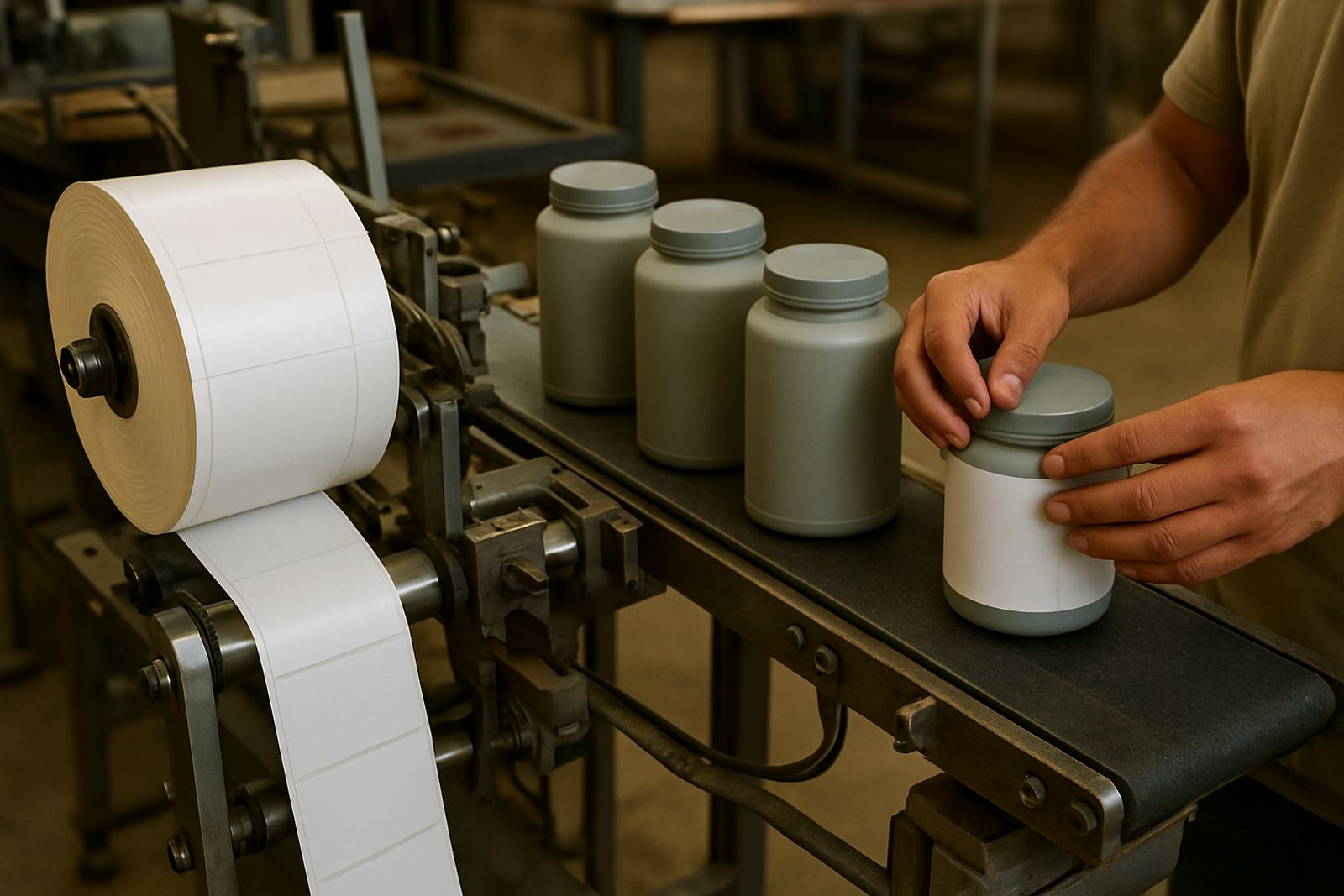
We print labels for jars, bottles, boxes, pouches and cartons in short runs or larger repeat orders. If your goods go out in chilled rooms, kitchens, workshop stores or on delivery routes, the label stock and adhesive need to suit that use. A label that peels at the corners or smudges in damp air costs you time and product value.
Sizes, shapes and material options
Labels can be cut to a simple rectangle, square, circle or a custom shape that follows your pack. Common sizes include 50 x 50 mm for seal labels, 70 x 50 mm for bottles, 100 x 70 mm for jar fronts and A4 sheet layouts for batch application. We also do longer wrap labels for cylindrical containers and spine labels for storage boxes.
- Paper labels for dry products and indoor storage
- Gloss or matt finish for retail presentation
- Water resistant stock for chilled areas and handling with damp hands
- Clear labels for a neat look on coloured containers
- Removable adhesive for temporary packs, promotions or test runs
Where needed, we can set up labels for variable content such as batch numbers, dates or product codes. That helps when you pack in small batches and need each run to stay traceable.
Where product labels suit best
Product labels suit food packing, cosmetics, cleaning products, herbal goods, hardware packs, craft items and general retail packaging. They are also useful for warehouses, school fundraising packs and local distribution where goods need to be sorted quickly. If your product is sold in a humid kitchen, a dusty store or a vehicle for long trips, the label finish needs to be selected carefully.
For bottled goods and jars, the key is adhesion around a curved surface. For boxes, the key is edge hold and easy scanning. For bags and pouches, the label must sit flat enough to stay legible without lifting. A good label should not interfere with sealing or opening, and it must still read clearly after rubbing against other packs.
- Food and pantry items packed locally
- Bath, beauty and personal care products
- Cleaning and chemical containers
- Retail hampers and gift packs
- Workshop spares, parts and stock labels
Printing, cut sizes and finishing details
We prepare artwork so the final label prints cleanly at the right size. Small text, barcode lines and ingredient blocks need enough space to stay sharp. If a label is too crowded, it becomes hard to read and may fail the basic checks a store or buyer expects. For that reason, we always look at font size, contrast and bleed allowance before printing.
Finishing options include straight cut labels, kiss-cut sheets for easy peeling, and individual cut pieces for hand application. For packs that get handled often, a matt laminate can help reduce scuffing. For display packs, a gloss finish can give the label a brighter look. We also advise on margins so your text does not sit too close to the edge, which is a common issue when artwork is rushed.
- Safe text margin: at least 2 mm from the cut edge
- Bleed allowance: 3 mm for full coverage designs
- Minimum practical barcode height: 20 mm where scanning is needed
- Recommended small text size: 6 pt and up for legibility
Application, surface prep and setup needs
Most product labels are applied by hand. No power or gas is needed for the basic application, only a clean, dry surface and enough time for the adhesive to bond. For larger packed runs, a simple application table, ruler and clean cloths help keep placement straight. If your containers come from a filling room or cold store, let them dry and reach room temperature before sticking labels, because condensation can cause lifting.
On oily, dusty or powdery surfaces, the area must be wiped first. On curved bottles, the label should be aligned carefully so the seam does not wrinkle. If the pack is exposed to frequent washing or high moisture, ask for a stock and adhesive suited to that use. In some cases, you may also need a test sample before the full order is printed, to check grip and look under your actual conditions.
Care, storage and repeat ordering
Keep unused labels flat, in a cool dry place and away from direct sunlight. Heat and humidity can affect the adhesive and curl the edges, especially in summer or in storerooms with poor ventilation. If you are storing labels for a long time, keep them in the original wrap until use. Avoid placing heavy items on top of the stack.
For labels already on products, avoid harsh scrubbing unless the stock is meant for that. If you need wash-off resistance, let us know before printing so the right stock is used. Repeat ordering is easier when the artwork, size and finish are recorded properly. Keep a sample from your last run so colour, layout and wording can be matched again with less back and forth.
What to check before ordering branded pens
Before ordering product labels, check the container size, the exact wording, whether you need ingredients or warnings, and how the label will be applied. Also decide whether the label must survive moisture, cold storage, sunlight or repeated handling. If you are selling in local shops, a neat barcode and clear batch marking can save time at the till and in stock control.
It helps to know the quantity needed per product line, plus whether you need one label design for all items or different sizes for jars, bottles and boxes. If your goods are packed in batches, send the latest wording early so we can set up the artwork properly and avoid costly reprints. A small mistake on a label can lead to a whole batch being held back, so it is worth checking spelling, quantities and any legal wording twice.
- Container material: glass, plastic, metal or carton
- Exact label size and placement area
- Indoor or outdoor use, and whether moisture is present
- Quantity per run and repeat order needs
- Text content, barcode, batch fields and warnings
Key facts
| Common sizes | 50 x 50 mm, 70 x 50 mm, 100 x 70 mm, A4 sheet layouts and custom cuts |
|---|---|
| Materials | Paper, gloss, matt, clear and water resistant label stock |
| Finish options | Matt, gloss, kiss-cut sheets, individual cuts and protective laminate |
| Use cases | Jars, bottles, boxes, pouches, cartons and local packed goods |
| Application method | Hand applied, with clean dry surfaces and no power or gas needed |
| Order format | Short runs, repeat runs and mixed sizes for product ranges |
| Artwork support | Layout, text checking, barcode setup and cut line preparation |