
Start with where the sign will live
The first question is simple: will the sign sit inside, under cover or fully outdoors? That one detail changes everything, because a board that works well for an indoor promotion can struggle for months on a roadside fence or a mine entrance in the Bojanala heat. At our Rustenburg CBD base, we see many jobs that fail early because the material was chosen for print cost alone, not for wind, moisture and sun exposure.
For a short term event, an indoor direction board or a temporary retail promotion, lightweight material can be enough. For a permanent price board, safety notice or school sign that must stay legible through rain and strong afternoon sun, a more rigid substrate makes better sense. Coastal humidity is less of a concern inland, but dust, dry air and UV still take a toll and glue edges can lift if the wrong finish is used.
- Temporary indoor use: keep it light and easy to move
- Outdoor use for 6 months or more: think rigidity and weather resistance
- Windy sites: allow for fixings, framing and flex in the material
- High traffic sites: choose a finish that cleans easily and resists scuffing
Lightweight materials for short term and changing messages
Lightweight sign materials are useful when the message changes often, the budget is tight or the sign needs to be mounted quickly. They are also practical for promotions, event branding, classroom notices, market stalls and portable displays. The main advantage is handling. They are easier to transport, faster to fit and simpler to replace when details change.
That said, lightweight does not mean flimsy if the application is right. A well prepared print on a lighter panel can still look neat, provided the fixing method suits the site. For example, a temporary banner at a school sports day in Rustenburg can be secured neatly with ropes or cable ties, then removed without leaving a mess. On the other hand, if that same banner is left in strong wind for months, it will wear quickly and start fraying at the edges.
- Good for banners, temporary notices and event signage
- Easy to move, store and replace
- Best for short term campaigns or indoor use
- Needs proper finishing to prevent tearing and edge lift
In practice, the best lightweight option is often the one that is finished properly, not the one with the lowest upfront cost. A clean hem, reinforced eyelets and a print layout that leaves enough margin around the edges can add weeks or months to the life of a sign. Small detail but it matters.
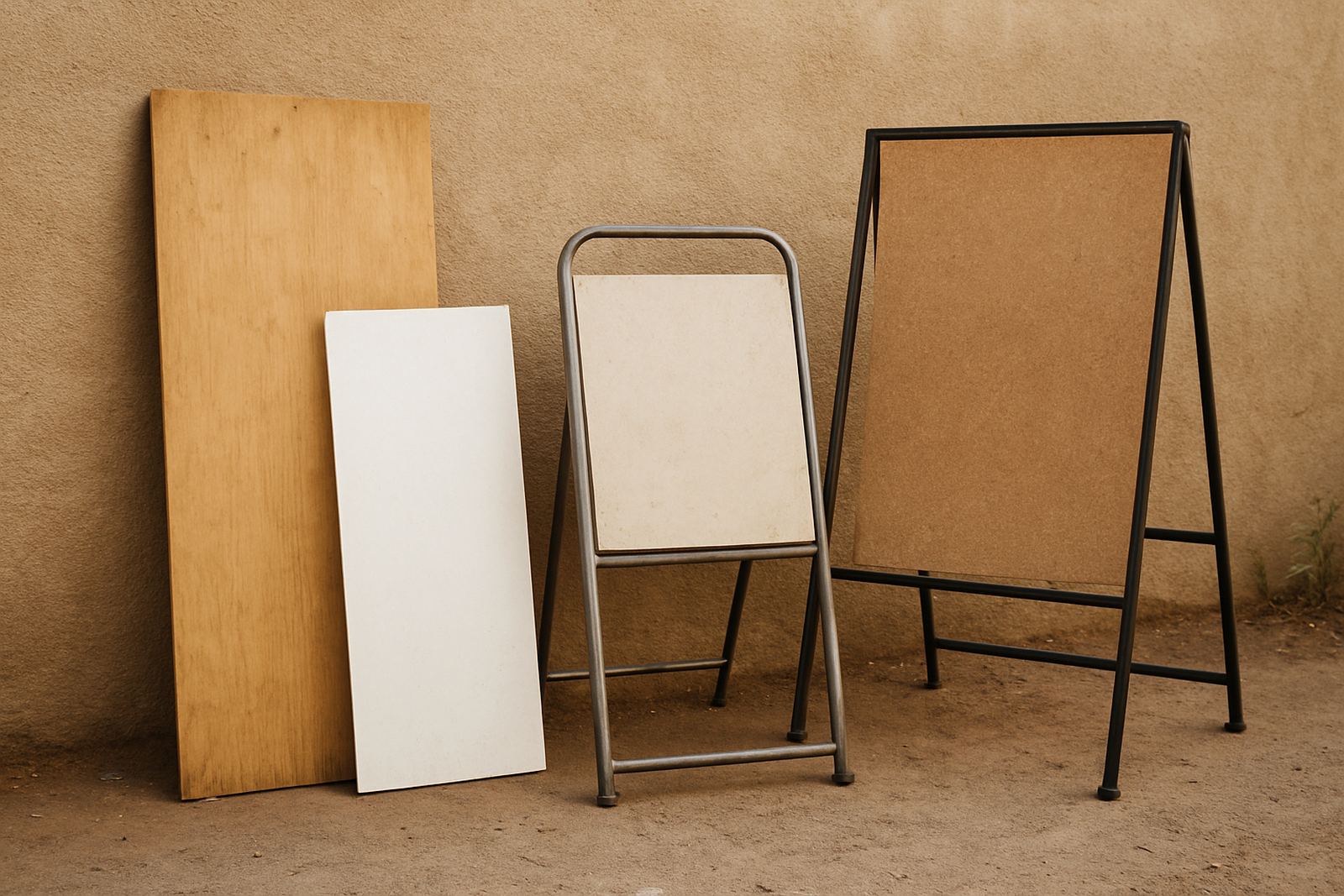
Rigid boards for durability and a cleaner public finish
Rigid materials suit signs that must stay in place and hold their shape. They give a neater appearance on shopfronts, site notices, school boards and directional signage where a flat, stable face is important. In busy areas such as Marikana, Mogwase or around industrial access roads, rigid boards are often the better choice because they stand up better to handling, vibration and repeated cleaning.
Rigid signs also work better when the artwork must remain readable from a distance. A notice board on a municipal fence or a mine access gate needs straight lines, sharp edges and no ripple in the face of the sign. If the panel bows, curls or flexes too much, the message looks tired even when the print is still fresh.
We usually recommend rigid options when the sign is meant to stay up through the seasons, or when it must be mounted on a wall, frame or stand. For schools and businesses that want a more formal finish, the extra cost often pays for itself because the sign lasts longer and looks more professional.
- Suitable for permanent or semi permanent signs
- Better for walls, posts, frames and fixed boards
- Helps keep text straight and readable
- Usually needs stronger fixings and proper installation
How wind, sun and dust change the choice
North West weather is not gentle on outdoor branding. Heat makes some materials expand, cold nights can tighten them again and repeated movement can weaken fixings. Add wind, dust and the odd pressure wash and the wrong material will start to show its age quickly. If a sign is placed near a road or an open yard, airflow around the edges becomes just as important as the print itself.
Sunlight is another major factor. UV exposure fades ink over time, but it can also dry out certain surfaces and adhesives. That means a sign that looks fine on day one may still need lamination, edge sealing or a more stable base if it is going to stay outside. For vehicle branding, we also look at flex and vibration because moving surfaces need material that can handle repeated wash cycles and heat under the bonnet area or in open parking areas.
When dust is part of daily life, smooth finishes are easier to clean. Rough or unsealed surfaces can trap dirt, which makes a sign look older than it is. A simple wash down should not damage the face of the sign, otherwise upkeep becomes a nuisance.
Matching the material to the job type
Different uses call for different sign material choices, and the best result usually comes from matching the board to the message. A safety notice on a mine site should not be treated like a weekend promotion. A school notice board should not be specified the same way as a one day market banner. The right choice depends on how long the sign must last, how often it will move and who will read it.
A practical way to plan your gazebo footprint:
- Promotions and events: lightweight, quick to install and easy to replace
- Shopfront branding: medium to rigid material for a neat long term finish
- Safety and compliance signs: rigid, durable and easy to read at a glance
- Directional boards: rigid with clear layout, especially where traffic moves fast
- Portable displays: lightweight enough for regular handling and storage
If the job needs post mounted installation, we also consider wind loading and fixing points. A board with too little support can twist, especially on open sites around Kroondal or Boshoek where the wind has space to move. That is why material choice and installation method should be planned together, not separately.
A Rustenburg example: one message, two solutions
Take a local business that wants to advertise a new service to mines and schools across Bojanala. They may need one banner for a short launch campaign and one rigid board for the front gate. Both carry the same message, but they work differently. The banner can be printed on a lighter base for a few weeks of promotion, then packed away. The gate sign needs a sturdier face, neat edges and secure fixings so it remains readable through rain, dust and daily traffic.
This kind of split approach saves money in the long run because each item is built for its actual use. It also avoids the common mistake of over specifying temporary signage or under specifying permanent signage. When the budget is planned properly, you get a cleaner result and less replacement work later.
For customers in Rustenburg, Tlhabane, Phokeng, Mooinooi and nearby areas, we often suggest looking at the whole job in one go: design, print, finishing, mounting and delivery. That way the material choice supports the site, the message and the installation method from the start.
What to ask before ordering sign material
If you are not sure which material suits your sign, ask a few practical questions before you approve the artwork. These questions usually narrow it down fast and help avoid wasted spend.
- How long must the sign stay up?
- Will it be indoors, under cover or fully exposed?
- Will it be fixed flat, hung, framed or moved often?
- Does the site get strong wind, dust or direct sun?
- Do you need the sign to be cleaned regularly?
- Will the message change later, or stay the same?
If you can answer those points clearly, the material choice becomes much easier. And if you are still unsure, it is better to compare two options on paper than to replace a failed sign after a few months. That is usually more costly, more frustrating and more work than getting it right at the start.