
Choose the right method for the garment and the job
When a uniform needs to look neat for months, the branding method matters as much as the garment itself. Embroidery gives a raised finish that holds up well on polos, jackets, caps, aprons and thicker workwear. Printed branding suits larger artwork, fine detail, colour blocks and lighter garments where stitch count would be too heavy. For mines, schools, contractors and retail teams in Bojanala, the best choice is usually based on fabric weight, daily wear, washing routine and how visible the logo must be from a distance.
As a guide, embroidery works well on cotton, polycotton and heavier fleece items, while print is often better on synthetic sportswear, hi-vis tops and T-shirts that need a lighter feel. If the branding must survive dust, friction and repeated laundering, embroidery is often the safer option. If the artwork includes gradients, small text or many colours, print can be the better route. We check the garment first, then advise on the method that will last and still look tidy.
- Thick polos and jackets: embroidery is usually the first choice
- T-shirts and lightweight sportswear: print often suits better
- Caps and bags: embroidery or strong vinyl branding
- High detail logos: print can give cleaner small elements
Match branding to Rustenburg conditions and wash cycles
Rustenburg weather and site conditions can be tough on uniforms. Dust from mine roads, sun exposure, sudden rain and frequent washing all affect how branding ages. A uniform that is worn in Kroondal or Marikana needs different treatment from office wear in the Rustenburg CBD. If the team works outdoors, the branding must cope with abrasion, fading and heat. If the garment is washed daily, the method must stay stable and not crack or peel after a few cycles.
For uniforms used in humid or coastal-like conditions, even though Rustenburg is inland, sweat and moisture still affect adhesion and thread performance. Print should be cured properly and applied to a compatible fabric. Embroidery should be digitised with the right stitch density so the garment does not pucker or distort. Good branding is not only about appearance, it is about matching the method to the real working conditions on site.
- Frequent washing: choose methods that are tested for repeated wear
- Outdoor teams: avoid fragile finishes and thin transfers
- Dusty environments: embroidery usually keeps a cleaner look longer
- Heat and sweat: use materials and placements that stay comfortable
A simple checklist before you approve artwork
Before any branding starts, the garment and artwork need to be checked together. A logo that looks clear on a screen may not work on a sleeve or a cap panel. Small text can disappear in embroidery, while very thin lines can break in printing if the setup is not correct. We prepare artwork so the finished item matches the brief, not just the original file.
Use this checklist before approving the job:
- Confirm the garment type, colour and fabric composition
- Check where the logo must sit on the chest, back, sleeve or cap
- Ask whether the team needs embroidery, print or a mix of both
- Make sure the logo has enough size for readable detail
- Confirm the number of colours and whether exact colour matching is required
- Ask about wash frequency, site exposure and daily wear patterns
If a logo has fine lettering or a narrow outline, we may suggest a simplified version for smaller areas. That small adjustment can save a lot of trouble later and keeps the uniform looking professional in real use.
How embroidery and print behave on common workwear
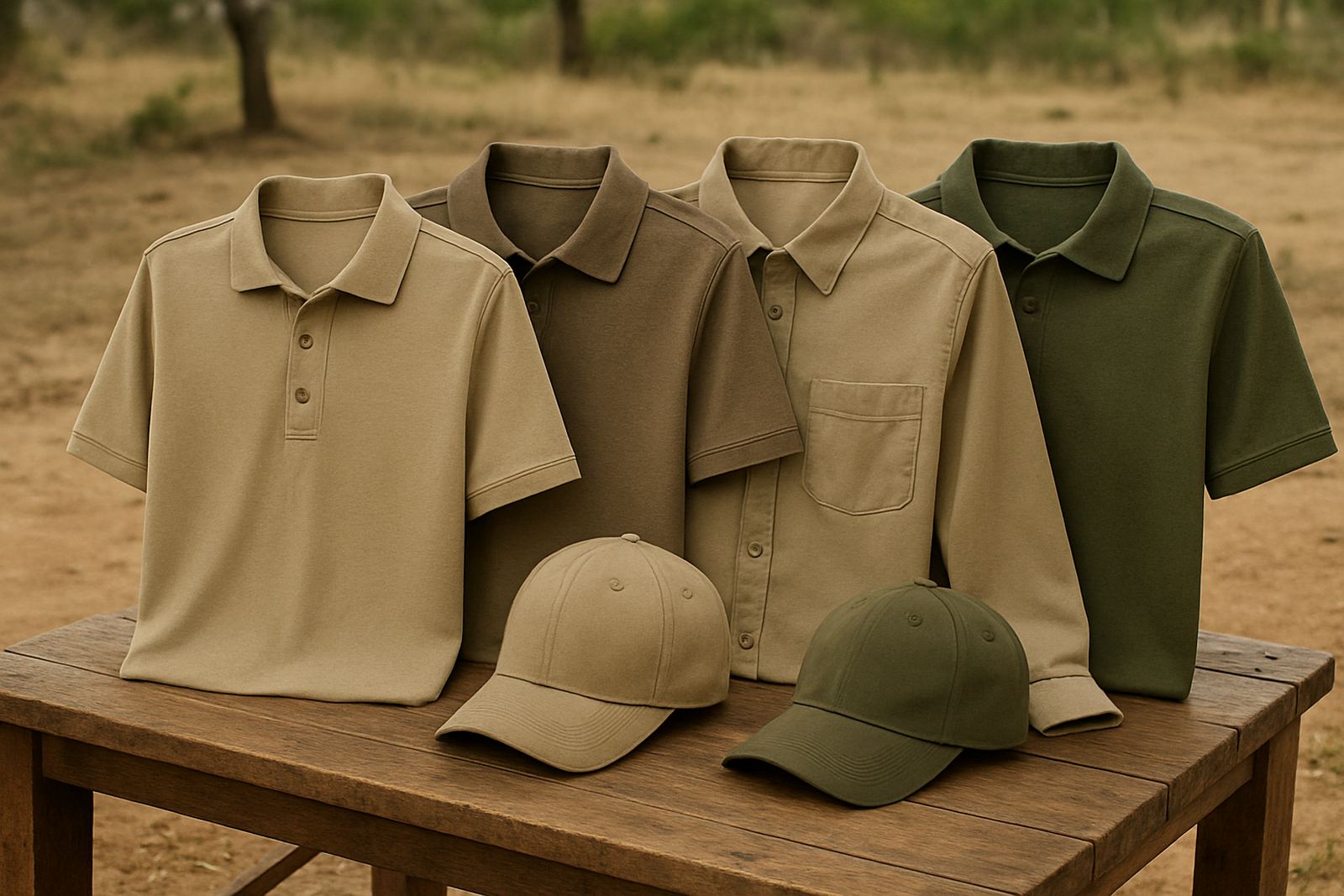
Different garments react differently once branding is added. Polos and golf shirts often take embroidery well on the left chest and back neck, while T-shirts usually look better with print on the front or back. Jackets can take either method depending on the outer shell and lining. Caps usually need careful placement because the panel shape is curved and the artwork must fit cleanly.
For schoolwear and staff apparel, embroidery gives a formal finish that suits long-term use. For event shirts, promotional tops and short-run campaigns, print can be more cost-effective and faster. On PPE, placement and visibility are important, so the chosen method must not interfere with reflective tape, seams or safety markings. We always check that branding supports the garment’s purpose instead of fighting against it.
- Polos: chest embroidery or print depending on brand style
- Jackets: embroidery on stable panels, print where fabric allows
- Caps: embroidery usually gives the neatest result
- PPE: branding must stay clear of safety features and stitching lines
Sizing, placement and finishing that keep uniforms tidy
Good uniform branding is about placement as much as the logo itself. If the mark is too large, it can pull on the garment or look crowded. If it is too small, it may disappear from a distance. A chest logo usually works well at a manageable size, while back branding can be larger for teams that need site visibility. Sleeve branding is useful for department names, trade roles or smaller identification marks.
Finishing also matters. With print, edges must be clean and the surface must be properly cured or laminated where needed. With embroidery, the thread colour, underlay and backing must be selected carefully to prevent distortion. Badly finished branding wears out quickly and can make an otherwise good uniform look tired. A neat finish adds order to the whole team, especially when staff move between clients, schools or mine sites in the greater Rustenburg area.
A practical handover plan for uniforms ordered in batches
Uniform projects often work best in batches, especially when staff numbers change or different departments need different branding. Start with one approved sample, then roll out the same size and placement across the full order. This avoids mix-ups and keeps colours consistent across shirts, jackets and caps. It also makes reordering easier when new staff join later.
We recommend keeping a small record of the approved garment type, logo size, thread or print colours, and the placement used. That record saves time on later orders and helps maintain a consistent look across branches in Tlhabane, Phokeng, Mooinooi, Boshoek, Mogwase and Marikana. If the team adds hi-vis gear, rainwear or seasonal items, the same branding standards can still be followed with a few adjustments.
For businesses that need deliveries and fitting, plan the schedule around staff availability and site access. That way the uniforms arrive ready for issue and there is less down time for the team.