
Start with the purpose your sign must serve
A sign is not only about looking neat. It must guide people, sell a service, identify a site, or carry safety information clearly enough to be read at a glance. Before you choose material or size, decide if the sign is meant for traffic, pedestrians, staff, visitors, or customers standing at the gate.
For mines, schools and business sites around Rustenburg, Phokeng, Tlhabane and Marikana, the first question is often visibility from a distance. A sign at a gate needs different lettering and layout than a reception sign inside a foyer. If the message changes often, choose a format that can be updated without replacing the whole panel.
- Who will read it first
- How far away they will be
- How long the message must stay up
- Whether it must move, fold, or stay fixed
- Whether the surface will face sun, rain, dust or handling
Indoor signs that need to look clean and last well
Indoor signs work best when they are tidy, easy to clean and matched to the space. Reception boards, directional signs, office labels, safety notices and wall branding all need a clear finish because people see them up close. In dusty work areas or busy admin blocks, a laminated finish helps with wiping and keeps print marks from wearing out too quickly.
If your building is affected by load-shedding, consider where natural light falls and whether the sign must still be readable when lights are low. High contrast lettering often works better than pale colours on a light wall. For internal wayfinding, use short wording and simple arrows rather than full sentences.
- Keep wording short and direct
- Use strong contrast between text and background
- Choose sizes that suit viewing at 1 to 5 metres
- Ask for durable fixing if the surface is rough or uneven
- Plan for cleaning if the area collects dust or fingerprints
For indoor branding, printed panels, vinyl graphics and cut lettering are common choices. If you need a more premium finish, materials can be mounted on rigid boards and edged neatly so they sit well in reception areas, classrooms or meeting rooms.
Outdoor signs for sun, wind and municipal exposure
Outdoor signs need to cope with North West weather. Strong sun can fade poor-quality print, wind can strain fittings, and dust can dull surfaces. On roadside sites or open yards, the fixing method matters just as much as the printed face. A sign that is too light for the frame or too small for the viewing distance will not do its job properly.
For permanent outdoor use, ask how the sign will be mounted, whether it needs a frame, and if the edge finishing can handle movement in the wind. In exposed areas near Kroondal, Boshoek or Mooinooi, a sign with good mounting and sensible sizing is usually better than a larger sign that is poorly secured. If the board will face direct sun for long periods, choose materials and inks suited to outdoor exposure.
- Confirm the mounting surface before production
- Allow for wind load on poles, frames or brackets
- Check visibility in daylight and at dusk
- Use materials suited to UV and rain
- Check whether municipal or site rules affect size and placement
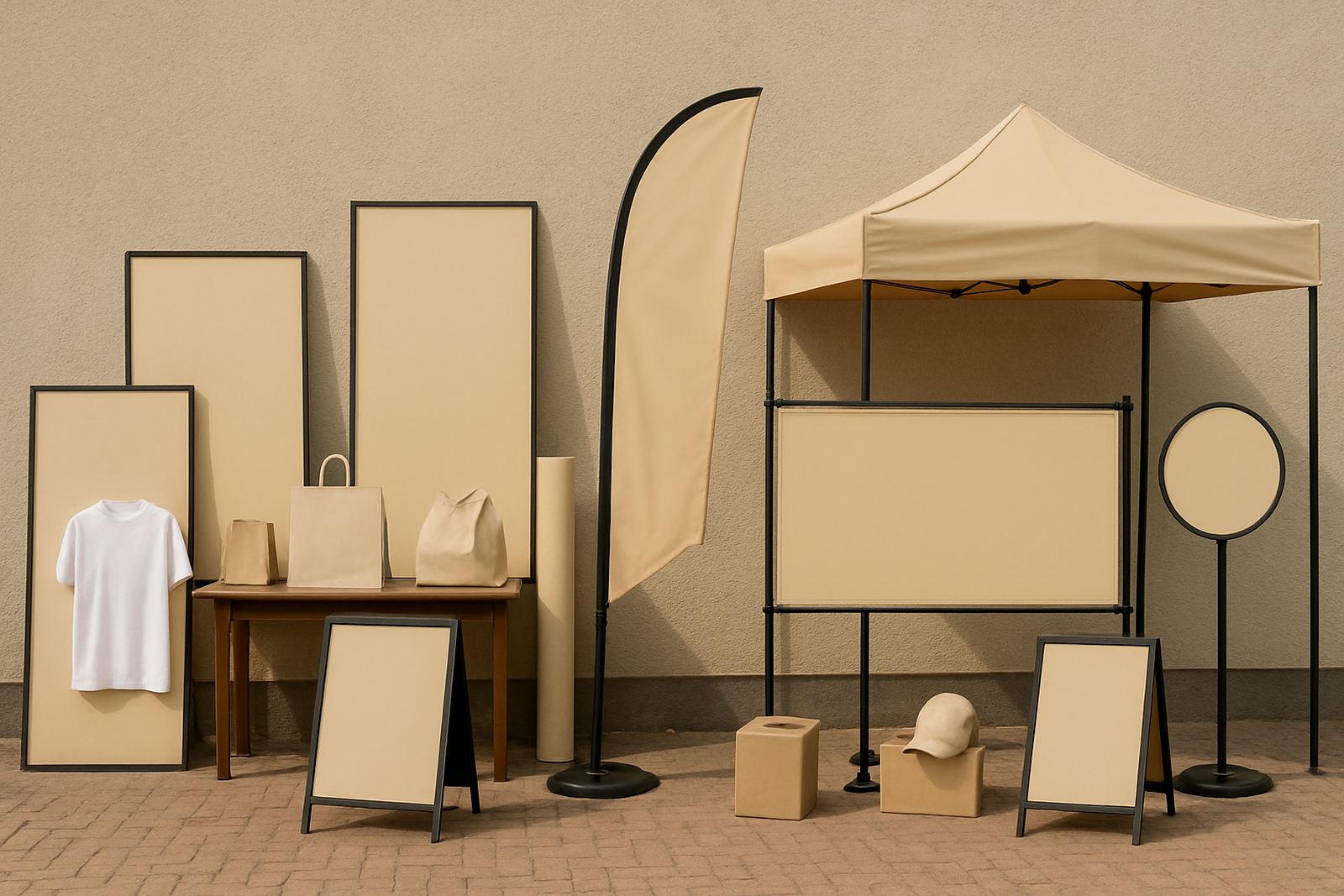
Permanent outdoor signage can include site boards, directional boards, safety boards and entry signs. If the sign is near a public road or a shared access point, make sure the message is clean and the layout is readable from a moving vehicle.
Temporary signage for events, promotions and short jobs
Temporary signs should be light, quick to install and easy to move. They are useful for school functions, trade days, promotions, community events, site notices and short-term campaigns. If a sign only needs to last a few weeks or months, there is no reason to overbuild it, but it still needs to stay legible and neat.
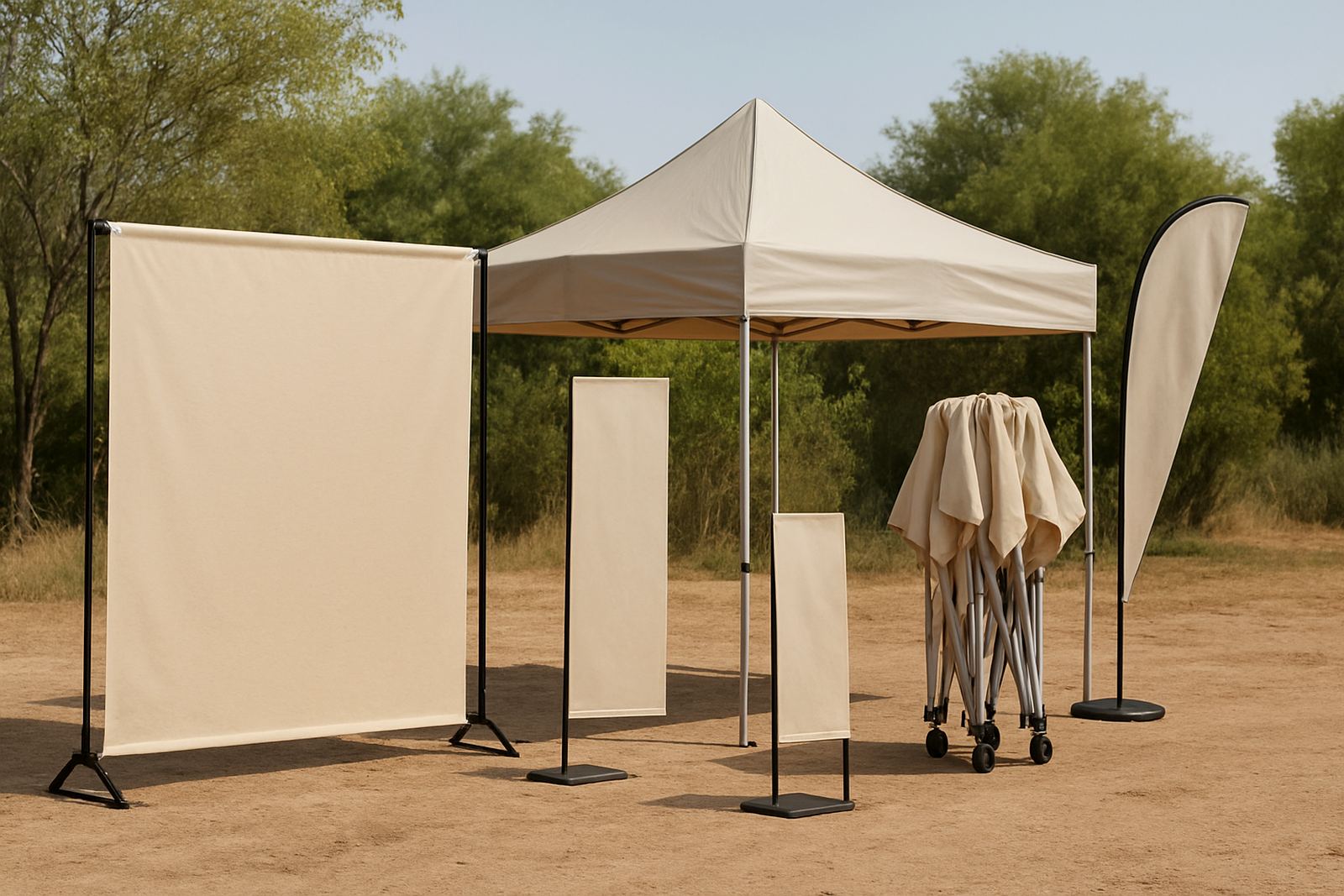
Banners, flags, gazebos, pull-up style graphics and printed boards are common for temporary use. For outdoor events in Rustenburg, factor in wind, dust and quick setup times. A temporary sign should pack down easily, and if it is reused, the finish should be strong enough to handle repeated transport. If the event is near a mine gate or school entrance, check site access and fixing points before you print.
- Choose lightweight materials for faster setup
- Ask for reinforced edges on banners and flags
- Plan for reuse if the same message will come back
- Confirm how the sign will be stored after use
- Keep the design simple so it reads fast in a busy space
Permanent branding that has to stay neat for years
Permanent signage is about consistency, durability and clean presentation over time. Office identification, workshop boards, entrance signs, directional boards and branded panels on vehicles or walls all need a finish that still looks proper after months of sun, cleaning and handling. If the sign forms part of your business identity, the lettering and colour matching should remain consistent across all branches and sites.
For companies serving Bojanala, it helps to use the same look at every location so customers recognise the business quickly. Permanent signs can also support compliance and safety, especially where visitors move through loading areas or production zones. If the sign is for a fixed site, think about the long-term replacement plan as well, not only the first installation.
- Use the same logo layout across all branches
- Choose a finish that can be cleaned without damage
- Allow for reordering if a panel is ever damaged
- Keep installation points accessible for maintenance
- Match sign style to the building and customer flow
What to prepare before ordering signage
The smoother the briefing, the better the result. Bring the exact wording, the size of the area, and any photos of the wall, gate, vehicle or stand where the sign will go. If you are unsure about dimensions, measure the space in metres and note any obstacles such as pipes, beams, windows, gates or uneven masonry. In Rustenburg sign work, the result improves when the wording, measurements and site conditions are clear from the start.
From our Rustenburg CBD base, we support customers in Rustenburg, Tlhabane, Phokeng, Kroondal, Boshoek, Marikana, Mooinooi and Mogwase. Our team handles artwork setup, vinyl cutting, large format printing, banner finishing, sign installation and delivery and setup where needed. That means we can help from the first layout through to the final fitting, which saves time when a site needs several items at once.
- Exact wording and spelling
- Preferred colours and any existing brand reference
- Measurement of the site in millimetres or metres
- Indoor or outdoor use
- Temporary or permanent duration
- Any site rules for access, safety or fixing
If the sign must include safety wording, directional arrows, or branch names, keep the content final before production starts. Small changes after print can delay the job and add cost.
A simple checklist for choosing the right sign
Use this final check before you confirm the order. If you can answer each point clearly, you are usually close to the right product. It also helps avoid the common mistake of choosing a sign that looks good on a screen but is too small, too busy or not durable enough for the site.
- Is it for indoor or outdoor use
- Will it be temporary or permanent
- How far away must it be read
- Does it need to move or fold away
- Will it face sun, rain, dust or handling
- Do you need installation, delivery or both
- Is the wording final and approved
If you are still deciding, a practical conversation helps more than a long wish list. The right sign should suit the site, the budget and the time it needs to last. A neat, readable sign usually outperforms a fancy one that is hard to see or expensive to maintain. For many Rustenburg businesses, the best result is the one that stays clear, holds up and does the job day after day.